

CONTACT US

PETITHAUSRC7155563
PetitHaus: Innovative housing solution that helps low/medium income earners access affordable, highly efficient qualitative living with convenience and unparalleled cost effectiveness.
Affordable Homeownership
SNEAK PEEK
In the quest for affordable housing, we (Nigerians) often look for a better engineer, a smarter architect, or a cheaper DIY construction trick. However, the reality is that housing in Nigeria is a deep structural economic problem rather than just a technical failure.
Housing affordability in Nigeria has reached a critical point where technical workarounds no longer effectively reduce costs. Despite advances in construction technology and design (and deep technical proficiency of Nigerian professionals), the cost of housing remains primarily an economic issue rather than a technical one.
While construction is a technical process, it accounts for less than a quarter of what decides housing outcomes. The rest (income, infrastructure, inflation, location, and finance), influenced by a fractured macroeconomic architecture, makes reliance on technical resourcefulness and creativity (in building a house) feel like a high-stakes financial gamble.
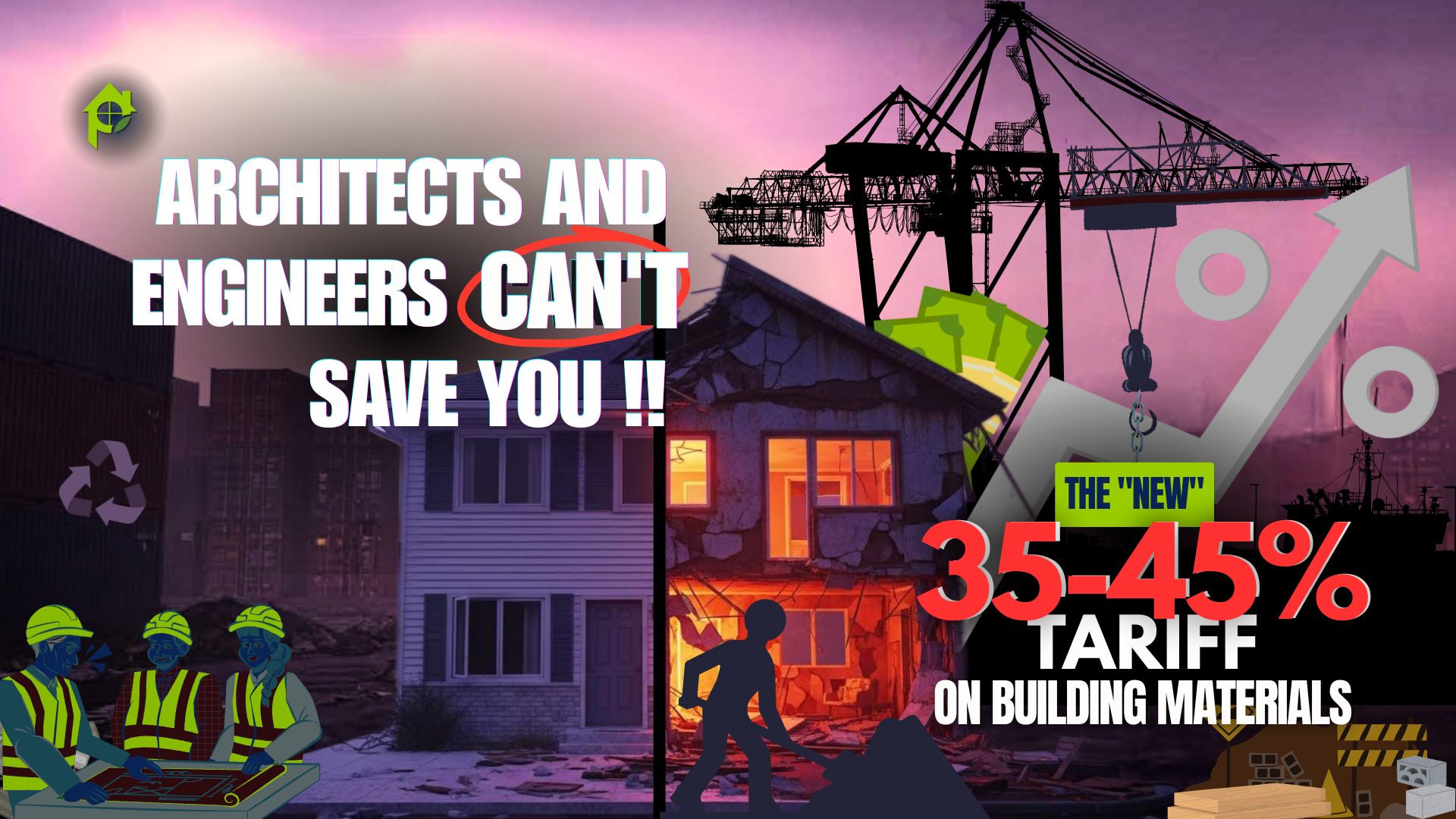
In recent years, building material costs (alone) have surged by approximately 40-50%, a rise not attributable to finance, profits, or investment returns but an unavoidable structural markup created by the connection between engineering and the economy.
We describe it as a “shadow tax.” An additional cost imposed by factors like high import tariffs and currency devaluation. Even with recent government efforts that have reduced some tariffs on construction materials to 30 to 40%, these economic pressures continue to overshadow technical solutions.
Even the most innovative construction practices cannot counteract the macroeconomic forces driving up costs, such as rising prices of cement, steel, and other essential materials. Since Nigeria heavily relies on imported construction inputs, local market dynamics and global economic conditions significantly influence prices.
Technical resourcefulness, while necessary, is insufficient without economic resourcefulness.
To truly reduce housing costs, intervention must occur at the macroeconomic level, influencing tariffs, currency stability, and local production capabilities. However, this is a complex challenge that cannot be solved by individuals alone.
Which brings us to the peculiarities of the Nigerian economy affecting housing.
The World Bank’s industrial policy framework highlights three critical features of Nigeria’s economy that shape the housing market:
The most visible impact of this architecture (mostly exacerbated by “small government bandwidth") is that while attempting to solve a problem, the defective one-size-fits-all policies blindly applied to economic crises create another.
For example, import tariffs to force the local circular economy. While intended to protect local manufacturers, these tariffs on imported construction materials (which have historically ranged between 40 and 50% but were recently reduced to between 30 and 40%), when combined with currency devaluation, make imports more expensive.
This “double jeopardy” of tariffs + Naira devaluation has effectively doubled housing costs over the past three to four years. Anecdotal evidence from developers shows how this has made it financially impossible to deliver housing projects affordably.
This then begs the question: "If import dependency is the problem, why don't we just buy local?”
The poor macroeconomic architecture is further complicated by a cycle of both psychological and physical realities:
Despite the obvious cost benefits of local materials, there is a deep-seated bias where the market views imported materials as a sign of quality and status, leading buyers to prefer "flashy" foreign finishes over local alternatives.
This cultural preference discourages manufacturers and investors from committing to local production, as demand remains insufficient to justify scaling operations.
Even where demand exists, local manufacturing struggles with infrastructure challenges:
This creates a paradox where "local" materials often end up being more expensive or less reliable than imports, further embedding the 'shadow tax' into the system.
Even the push for "green" or sustainable housing has fallen into the import trap. With very low investments in research and development of indigenous technologies, most of the available sustainable technologies are import-driven, meaning that a bid for environmental efficiency ends up driving up the cost of the project because they are also subject to tariffs and devaluation issues.
While sustainability is a laudable goal, it currently adds to the financial burden of housing rather than alleviating it, illustrating the complex tradeoffs policymakers and builders must navigate.
This is not a blame game. Improving demand for our local building materials goes beyond “Buy Naira to Grow Naira” campaigns. Likewise, every policy decision is fundamentally an opportunity cost; it trades a win for a cost.
The import tariff problem is a protectionism vs. affordability trade-off. Raising tariffs to help a single local steel mill might be seen as a "win" for industrial policy, but it simultaneously taxes 200 million people by making their housing 40% more expensive.
This is why growing local production and breaking the cycle of import dependency require moving beyond "one-off" fixes and addressing the macroeconomic spectrum. The government, market, and private sector must participate in shifting the macroeconomic architecture of the housing market:
a. Strategic Interventions.
Given the government’s limited technical capacity and fiscal constraints, reform must start with appointing competent professionals to appropriate roles (“fit the right pegs in the right holes”).
Additionally, housing interventions should be decentralised, empowering local governments and autonomous communities to address their unique challenges.
b. Improving Infrastructure.
Power, transportation, and logistics are critical to unlocking economic potential and supporting local manufacturing.
c. Leveraging Nigeria’s Large Market for Technology Transfer.
Nigeria’s population size can be harnessed as leverage to attract foreign direct investment and technology transfers. For example, to access the large market, foreign firms with prefabricated building technology would be required to form joint partnerships with local firms to transfer technical know-how.
These kinds of “joint ventures" requiring knowledge transfer to local firms will stimulate domestic skills and local production capacity.
a. Changing Cultural Perceptions.
There must be a market-wide move to value the durability and ubiquity of local materials (like laterite or timber) over imported goods. Market actors must rebrand and promote local building materials, investing in research and development to enhance quality and appeal. Elevating local products to meet international standards will help shift consumer preferences and increase demand.
b. Professional Flexibility and Economic Awareness.
Architects, engineers, and builders should plan projects with economic realities in mind, including currency fluctuations and import tariffs. Blending local and imported materials strategically can optimise costs and provide flexibility against market volatility.
Professionals must also advocate for economic accountability and stability rather than relying solely on technical fixes.
c. Individual Choices Matter.
The only way to reduce the cost of construction materials is to grow Nigeria's local materials market.
And the surest path to achieving this is by using, buying, and demanding local materials. To drive market growth and reduce dependence on costly imports, Nigeria and Nigerians must drive collective actions that are aligned with sound economic policies and infrastructure development.
Every (& prospective) homeowner must understand the economic foundations of Nigeria’s housing crisis and engage stakeholders to collaboratively create sustainable, affordable housing solutions for the future.
The key to reducing housing costs lies in building a sustainable local manufacturing base supported by appropriate policies and changing consumer preferences, rather than relying solely on technical innovations or shortcuts.
If you want affordable housing, you don't just need a more honest builder or a more resourceful engineer; you need a stable economy. The housing crisis is a (macro) economic crisis, and its solution lies in collective (macro) action, not individual (micro) activities.
When we choose local, local grows. By demanding local manufacturing and advocating economic stability, we can finally dismantle the "Shadow Tax" and build a housing market that works for every Nigerian.
While professionals in construction remain skilled and innovative, their efforts are overshadowed by economic realities such as tariffs, currency fluctuations, and market dynamics. Addressing housing affordability requires a multi-faceted approach involving government reforms, infrastructure investments, cultural shifts, economic stability, and proactive roles by professionals and consumers.
01.

02.
Category
Discover insights into creating affordable homeownership with PetitHaus.







.avif)
.avif)